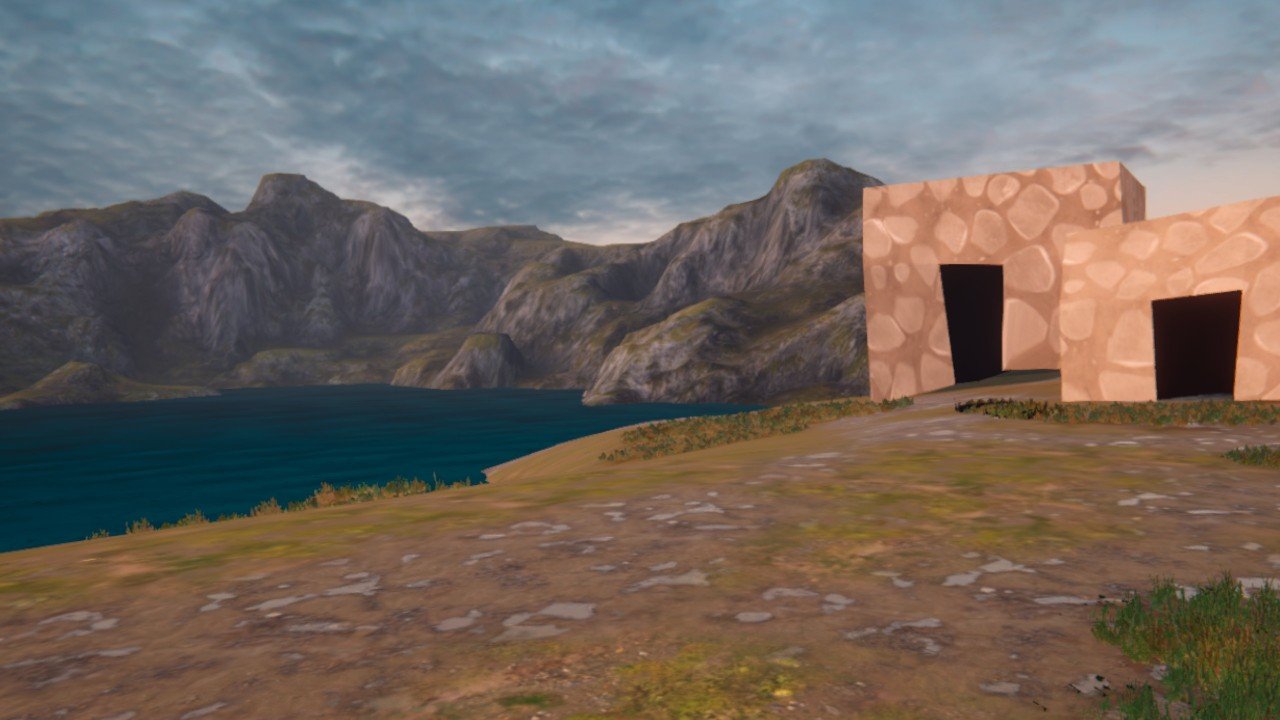
Overview
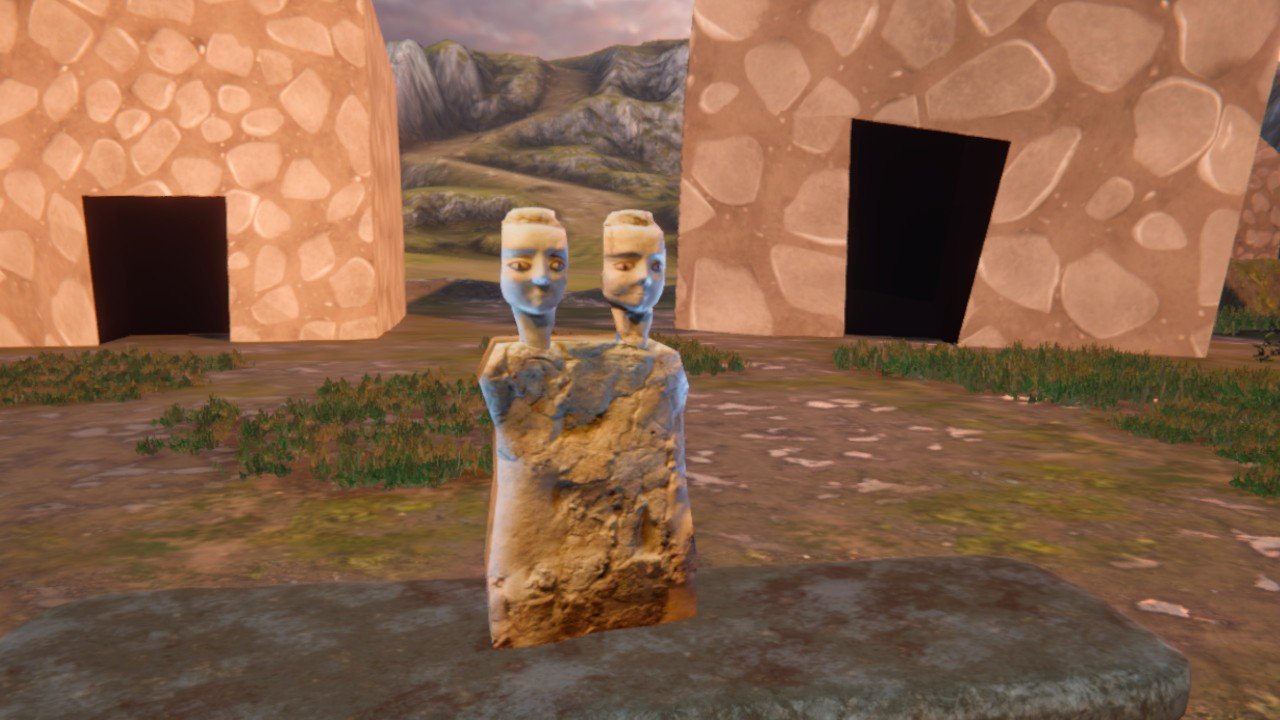
'Ain Ghazal, on the edge of Amman, is home to some of the earliest large-scale statues of the human form, made around 9,000 years ago. Yet most people in Jordan know little about them. The goal of this project was to help people learn about 'Ain Ghazal and feel connected to it as part of their own heritage, by building a statue themselves instead of reading about one.
The problem
Museums usually show the finished statues, but not how they were made. The experience was designed for visitors to the Jordan Museum and tested with university students and staff.
Three things made it hard:
- Many people had never used VR before, so the experience had to teach itself.
- Motion sickness could end a session within seconds.
- Once inside, people wanted to explore the world and often stopped listening to the narration, which carried most of the learning.
What visitors do
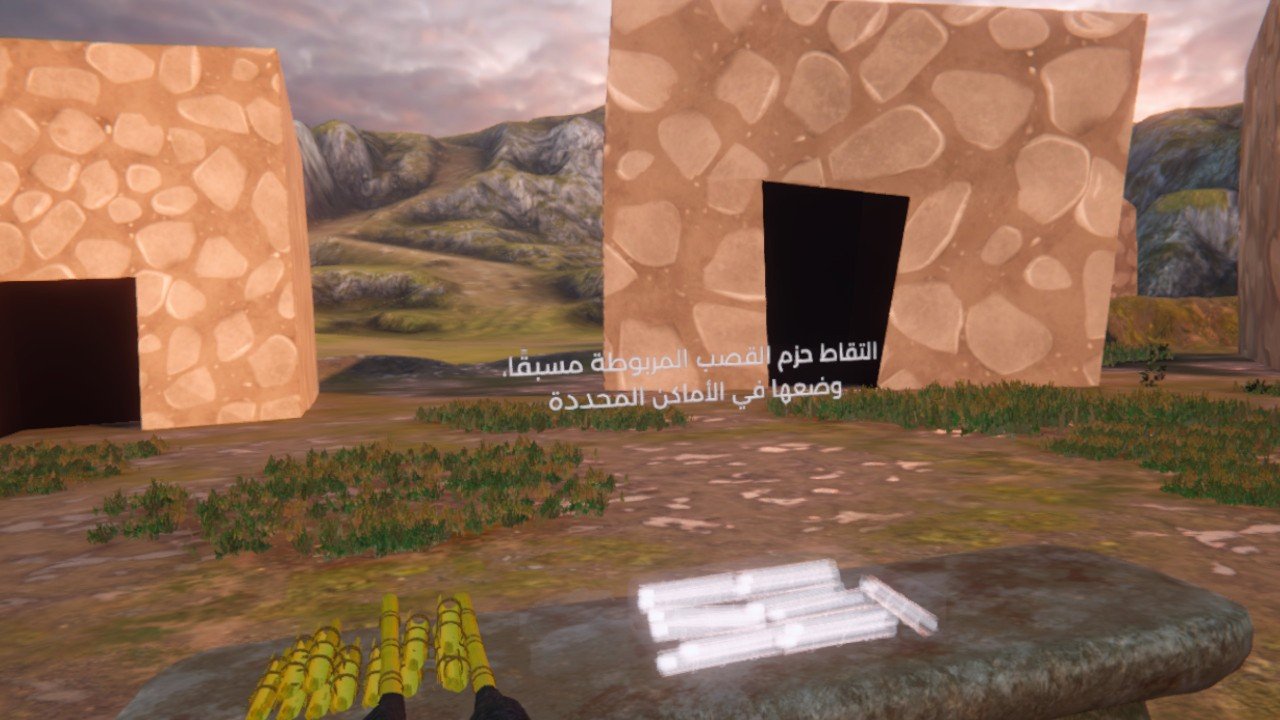
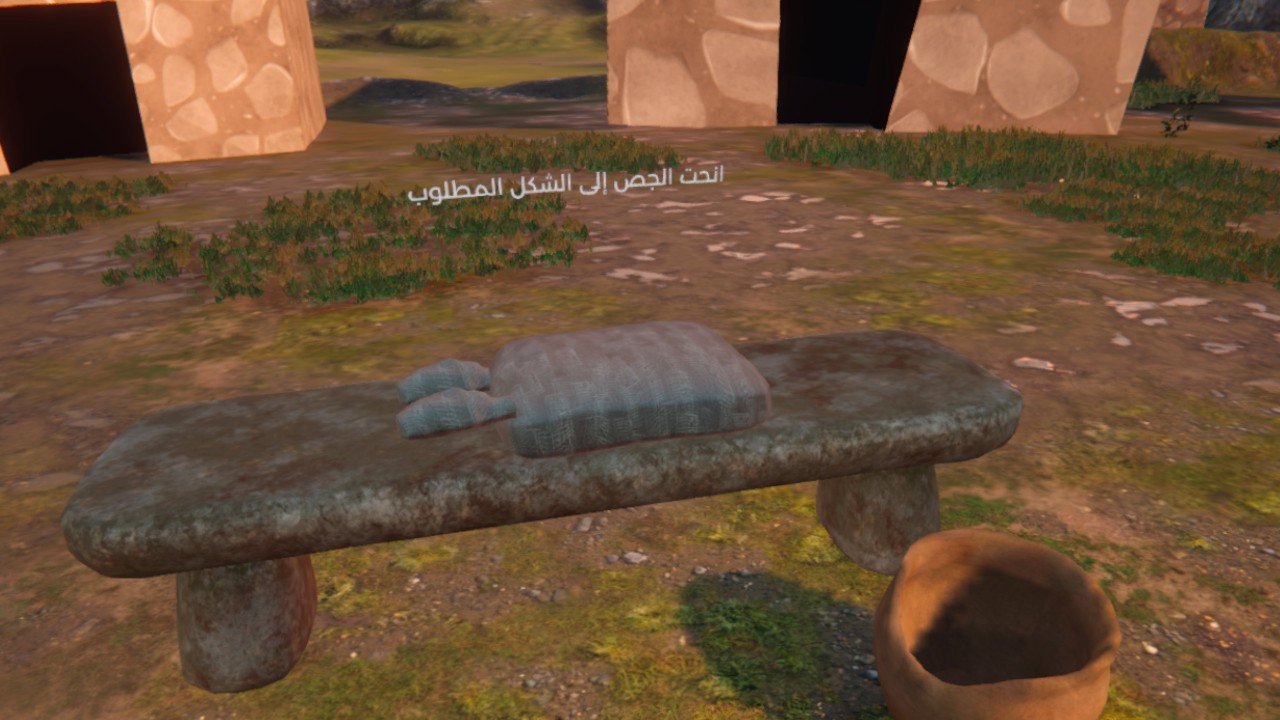
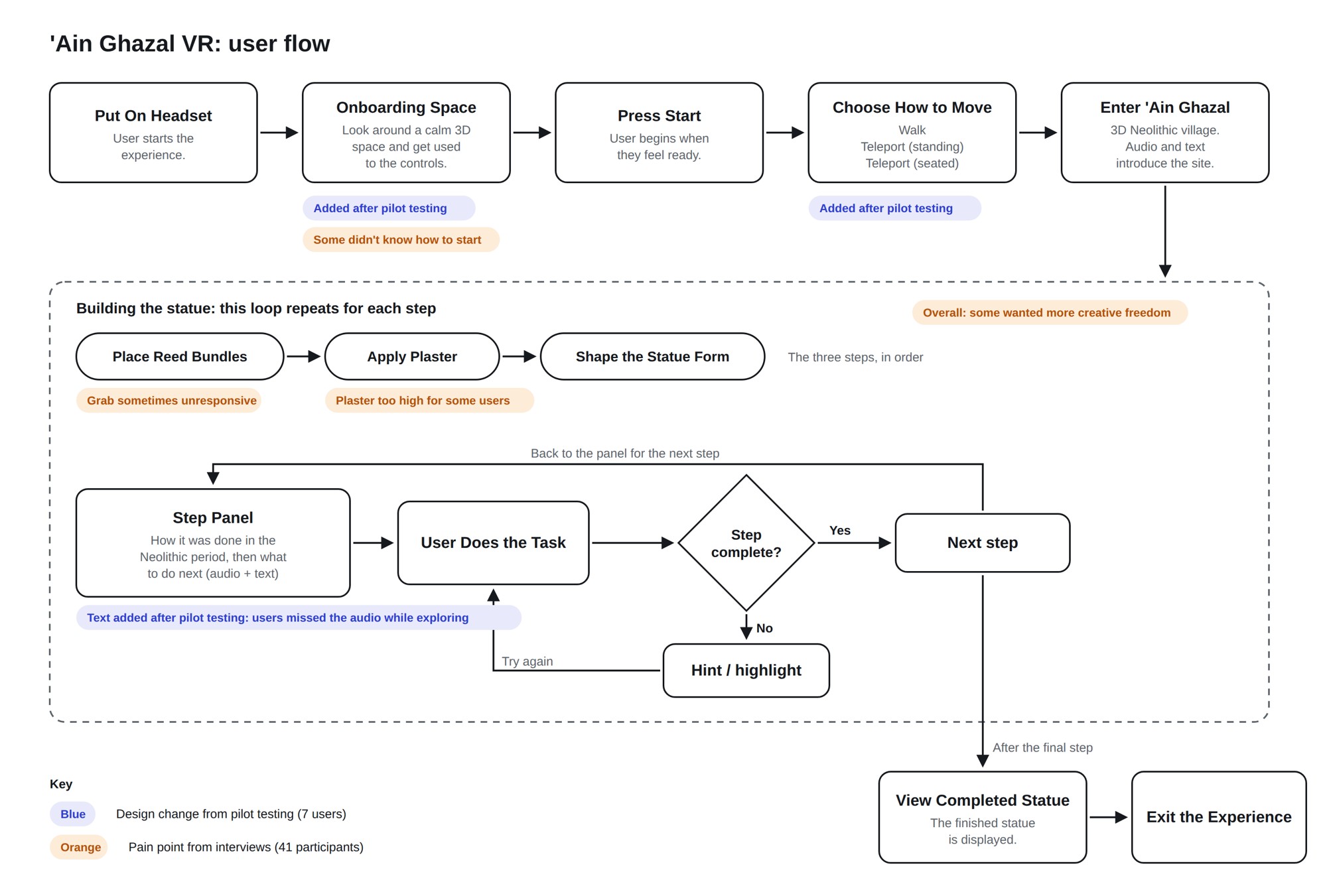
Visitors enter a Neolithic village and build a statue the way its makers did, in about a minute: they place reed bundles to form the inner structure, apply plaster over them, and shape the final form. Then they see the finished statue. The steps and materials follow archaeological records, and were checked with experts at the Jordan Museum.
How the design evolved
I didn't design everything at once. I tested early versions with 7 users and added each of these decisions when testing showed a need for it.
Onboarding inside the world
Visitors start in a calm 3D space to get used to the headset, then press Start when they feel ready.
Three ways to move
Walking, teleporting while standing, or teleporting while seated, so nobody has to push through motion sickness.
Text alongside audio
Early users were busy exploring and missed the narration. So each step now also appears as a short written panel: first how that step was done in the Neolithic period, then what the visitor should do next.
Testing
272 participants took part on campus. Each person answered five knowledge questions before and after the experience, then completed a survey about learning, cultural connection and how authentic the experience felt. I then interviewed 41 participants to understand the reasons behind the numbers.
Results
- People learned. Average knowledge scores rose from 1.26 to 3.37 out of 5, and 218 of the 272 participants improved.
- They felt connected. People who felt a stronger connection to the heritage also reported learning more.
- Doing made it stick. In interviews, learning by doing was the strongest theme. Having built the statue with their own hands, people remembered how it was made.
What didn't work
The interviews also showed real problems, which I'd fix first in the next version:
- Grabbing the reeds sometimes didn't respond, and the plaster was placed too high for some people to reach.
- A few first-time users still didn't know how to start without help.
- Some people found it too guided and wanted more freedom to shape the statue their own way.
What I learned
Physically doing each step was what made people learn and care, more than anything they heard or read. But that only works when the interaction feels effortless. Every moment spent fighting the controls is a moment not spent learning, so in immersive design, usability isn't separate from the content. It's what lets the content land.
Read the full paper: doi.org/10.28945/5722